Halloween Ghost Cat
First Impressions: Playful, Not Precious
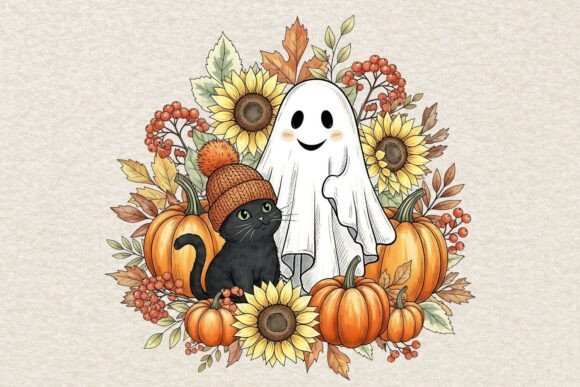
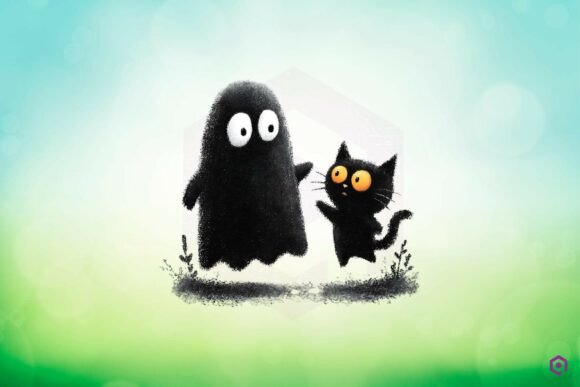
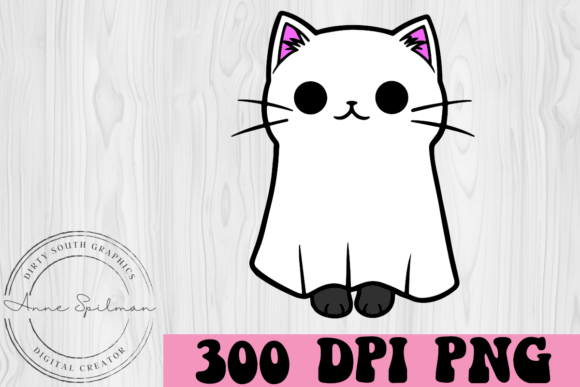
When Halloween Ghost Cat lands in your inbox, it doesn’t shout — it grins. Softly rounded ghostly form, a subtle feline silhouette peeking through the translucence, eyes just mischievous enough to feel alive without crossing into eerie. It’s not cartoonish, not overly detailed, and definitely not spooky in a way that alienates kids or grandparents. That balance is rare — and valuable. As someone who’s stitched hundreds of holiday designs onto everything from baby onesies to boutique aprons, I immediately saw where this one fits: friendly seasonal charm, not theatrical fright.
Where It Shines in Real Embroidery Projects
Last week, I prepped a batch of custom embroidered cotton tote bags for a local gift shop’s October launch — lightweight canvas, medium stitch density, 4”–5” hoop size. Halloween Ghost Cat scaled beautifully at 4.25”. The ghost’s outline held clean satin stitch definition, and the cat’s ear suggestion inside the form translated clearly in fill stitch without muddying. Customers loved how it read instantly at arm’s length — no squinting, no confusion. It also worked cleanly on a soft-loop terry kitchen towel (with tear-away + cutaway stabilizer), and held up well on a lightweight unisex sweatshirt — the ghost’s gentle curves softened the garment’s bulk without looking lost.
For Etsy sellers and small shop owners: this design reads well in digital mockups, especially against light neutrals like oatmeal, heather grey, or ivory. Its transparent background makes it easy to layer over textured patterns or subtle prints in your listings. And because it’s built as a high-res .png (300 dpi, ≥2500 px on longest side), you can confidently generate crisp printable mockups — no pixelation when zoomed or printed at 8x10 for booth signage or product tags.
Where to Pause — Not Panic
Halloween Ghost Cat isn’t built for micro-embroidery. Don’t force it into a 2.5” hoop on a curved cap front — the subtle interior cat shape risks collapsing into a blob. Likewise, avoid dense fill-heavy versions on thin, slippery fabrics like rayon challis or lightweight polyester unless you’re using heavy stabilizer and reducing stitch density manually. On dark fabric, test thread contrast first: light grey or off-white thread keeps the ghost airy; stark white can flatten its depth. And while it works fine on baby embroidery (think onesie or burp cloth), skip it for ultra-fine knit bodysuits — the ghost’s soft edges need at least a light-medium fabric weight to land with clarity.
What It Adds to Your Finished Product
- Visual appeal: Feels handmade, not clipart — its gentle asymmetry and implied texture suggest intention, not automation.
- Stitching clarity: No tiny interior lines or hair-thin gaps that vanish under thread — great for consistent results across machines.
- Product value: Elevates simple items (a plain tea towel, a basic canvas pouch) into curated seasonal goods.
- Customer trust: Buyers recognize quality restraint — they don’t question whether it’s “real embroidery” or a lazy print overlay.
- Giftability: Works equally well for a toddler’s Halloween party favor and a millennial’s “spooky-but-sophisticated” throw pillow.
Practical Designer Notes You’ll Actually Use
Before stitching Halloween Ghost Cat into your next craft business project, do these five things:
- Test it on scrap fabric matching your final substrate — especially if using textured weaves, stretch knits, or dark backgrounds.
- Check thread color contrast in natural light: what looks balanced on screen may mute on fabric.
- Review stitch density in your embroidery software — if converting to machine embroidery design, reduce fill density slightly for lightweight fabrics.
- Confirm hoop size compatibility — this design scales best between 3.75” and 5.5”, depending on fabric stability and desired impact.
- Inspect small details in black-and-white mockup mode — does the cat’s ear still read? Does the ghost’s bottom edge stay distinct from the fabric?
And one non-negotiable: verify licensing before selling finished products or bundling Halloween Ghost Cat into digital embroidery files or craft kits. Since it’s delivered as a .png graphic (not SVG or native embroidery file), you’ll need to digitize it yourself or hire a digitizer — and that means confirming commercial use rights upfront. As an Illustrations asset, it’s flexible, but flexibility doesn’t equal automatic permission.
Final Thought: A Design That Serves the Maker
Halloween Ghost Cat isn’t flashy. It won’t win awards for technical complexity — and it shouldn’t. What it does deliver is quiet reliability: a seasonal motif that supports your voice, not drowns it. Whether you’re embroidering patches for a school fundraiser, building an Etsy collection of Halloween-themed handmade product bundles, or creating limited-run boutique apparel, this design gives you room to breathe. It leaves space for your thread choices, your fabric stories, your customer’s personality — and that’s the mark of good Graphics for makers.
If your goal is to ship confident, cohesive, commercially viable embroidery projects — not just “Halloween stuff” — then Halloween Ghost Cat earns its place in your working library. Not as a novelty, but as a thoughtful, stitch-ready foundation.